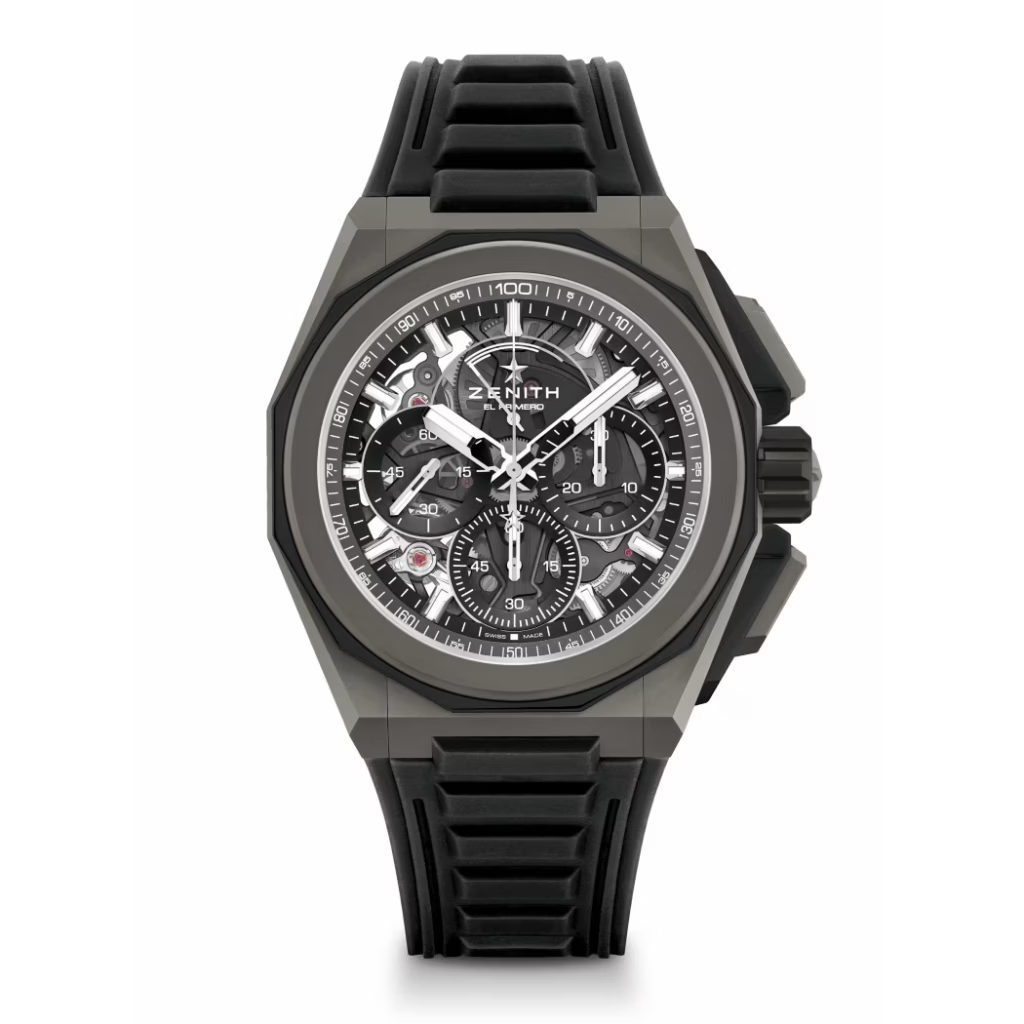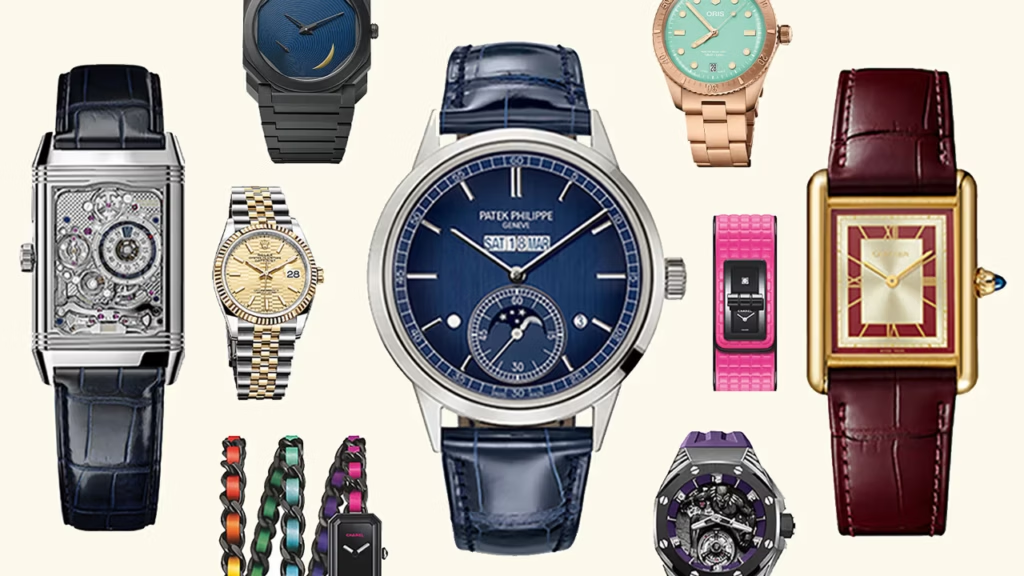
At the annual trade show Watches and Wonders, timepiece companies kicked off the year with some of the watch world’s biggest debuts, showing where the industry is headed.
For the watch industry—as for so many others—2020 began as an apocalyptic disaster film.
“Vegas closed first, then New York, then Florida, then London, then Switzerland. Then the entire world closed last March,” says Brian Duffy, CEO of the Watches of Switzerland Group (WOSG), a retail group with around 150 stores in the U.S. and the U.K. and a large online presence. “We had no product coming in and we had no shops open.”
Next, the Watches and Wonders fair in Geneva, scheduled for late April 2020 and usually held in person, moved online. Then, an even larger fair, Baselworld, was postponed and eventually canceled. Worse, it soon became a possibility that Baselworld, first staged in 1917, might never happen again.
So when this year’s Watches and Wonders—now Switzerland’s largest and most influential fair in the vacuum left by Baselworld’s cancellation—rolled around still online, time hung in the balance. Watch collectors worldwide mourned the opportunity to see, hold and wear new developments “in the metal.” Brands braced themselves: Would there be a retreat to stalwart classics or would innovations take the (virtual) stage?
Last week’s opening on April 7 launched fireworks in the horological universe. The number of brands expanded exponentially to 38. Jaeger-LeCoultre launched the Reverso Hybris Mechanica Calibre 185, a $1.6 million timepiece that features four dials and 11 complications, including a moon phase that needs adjustment only once in 1,111 years. Architect Tadao Ando’s latest collaboration with Bulgari was unveiled, revealing a minimalist masterpiece in black ceramic—the same material that Omega used for its newest diving watch, the Seamaster Diver 300M Black Black, released just before the fair. After around six years of work, Patek Philippe introduced a feat of engineering: allowing a perpetual calendar to appear for the first time on one of its wristwatches in a straight line in a single aperture. Explosive color was everywhere, including the green-dialed Rolex Oyster Perpetual Datejust 36 laser-etched to resemble palm fronds and Chanel’s shocking-pink Code Coco Electro.
And timed simultaneously to the fair, Audemars Piguet staged a Hollywood-ready premiere in Los Angeles for its Royal Oak Concept “Black Panther” Flying Tourbillon—the first in a collection inspired by Marvel Comics superheroes.
What gave companies the confidence to pursue such audacious avenues of cost-heavy research and development coupled with bold, brash design? For one thing, for those who love them, watches remained essential investments in 2020.
“We were convinced, correctly, that people generally don’t cancel their intention to buy a beautiful Cartier or a Patek Philippe,” WOSG’s Duffy says.
The ongoing investment by brands in new movements, complications and materials is partly motivated by a simple fact: New watches sell and garner more media attention than simple reissues of existing models. There are legions of collectors who will purchase any new edition of their favorite watch model, and brands don’t want to appear to be standing still.
Ultra-luxe brands, which had previously eschewed prioritizing e-commerce, were wooed out of their analog hideaways and focused more intensely on digital sales. This happened in part, Duffy says, at the request of WOSG, which itself had pivoted to a digital strategy with an amped-up online presence. Duffy conducted Instagram Live interviews with brand CEOs, staff arranged virtual appointments with clients and an Instagram augmented-reality filter allowed people to see how a watch looked on their wrist. As a result, WOSG’s online business, he says, significantly increased.
The shift was inevitable, says Duffy, but Covid-19 accelerated it by three to five years.
“Technology has compensated for the lack of tourism,” says Bulgari CEO Jean-Christophe Babin, who relied on the brand’s digital presence to knock on doors virtually and to sell to customers one-on-one over the past year. He also froze hiring and expenses, cut budgets to amass a reserve and switched perfume production to manufacturing hand sanitizer. “Luckily, three countries got through the crisis quickly. China, South Korea and Japan bounced back in September,” he says.
China was also the site of an in-person Watches and Wonders fair, which opened just as the digital one closed and runs until April 18. “Two years ago, the discussion was, ‘OK, do we need a physical fair?’ Today there is no question,” says Emmanuel Perrin, the newly appointed head of the Fondation de la Haute Horlogerie, the not-for-profit organization that stages the fair. (He also oversees specialist watchmakers distribution at Richemont.)
Technology played a starring role thanks to an invention from California-based PORTL, a device that transmits hologram recordings of people and objects in real time across vast distances, a process known as holoportation.
Visitors to the fair were treated to the watch world’s use of PORTL’s technology when, on opening day, IWC Schaffhausen CEO Christoph Grainger-Herr presented the brand’s new collection in Shanghai while he and the watches remained in Schaffhausen, Switzerland. “If you can’t come to the boutique,” says PORTL CEO and inventor David Nussbaum, “we’ll beam the boutique to you.”
Time Machine
Some of the most exciting designs from this year’s Watches and Wonders fair.
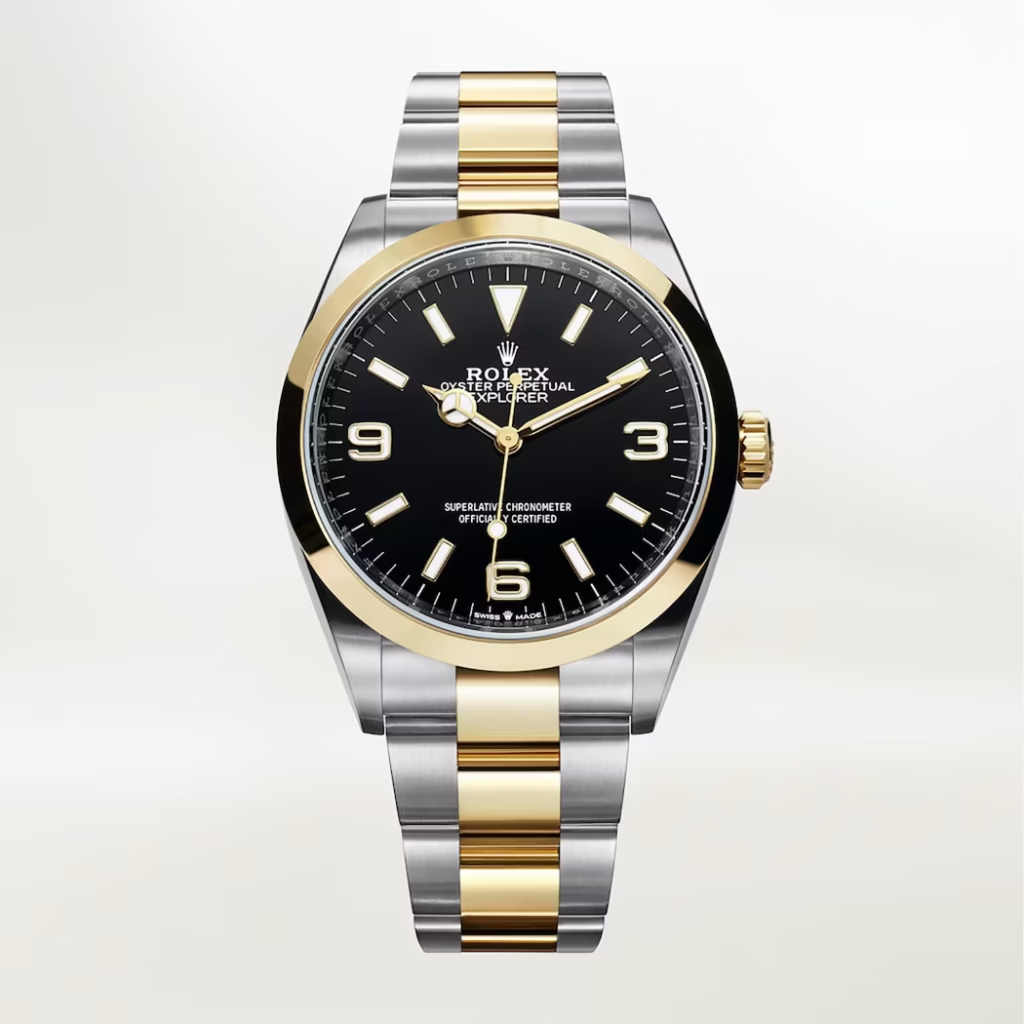
Rolex’s signature Explorer is reimagined with a shrunken 36mm case and a two-tone Rolesor of steel and yellow gold.
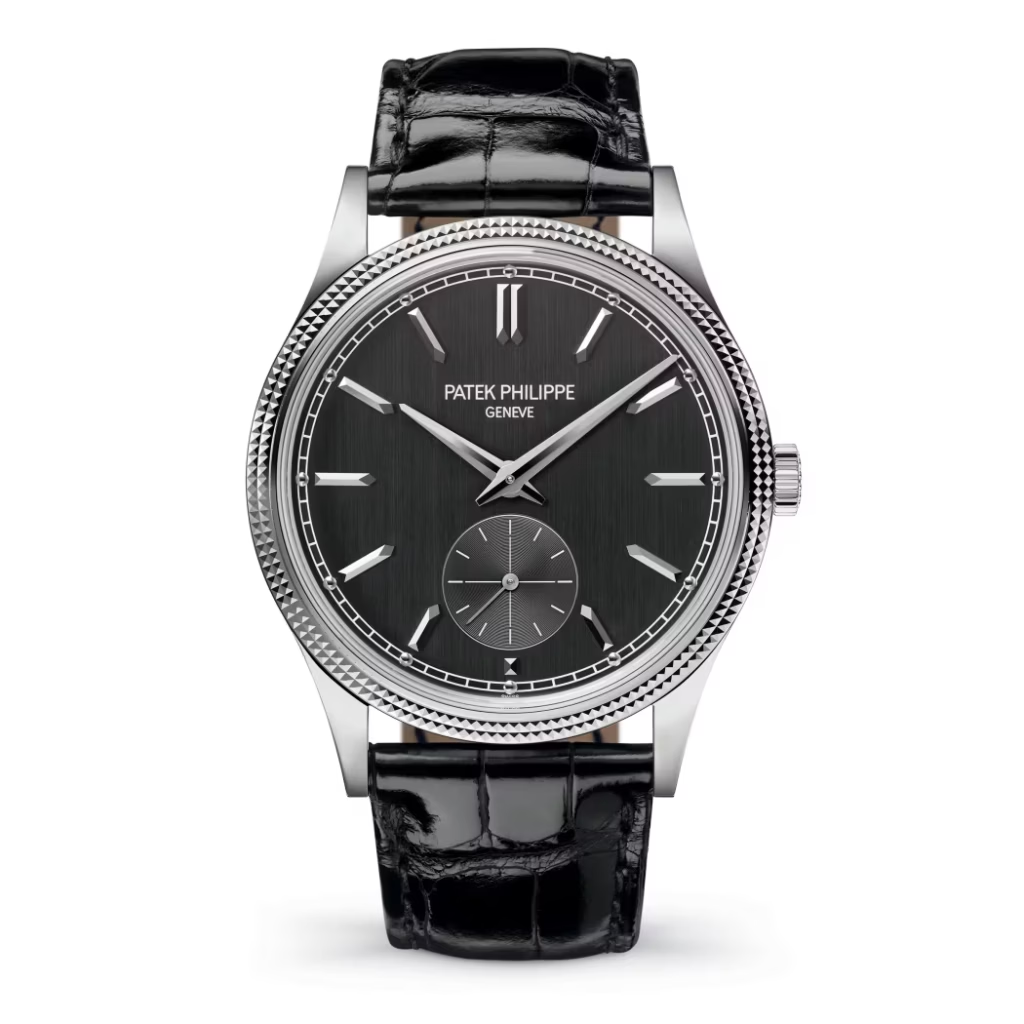
A brand-new movement is concealed behind traditional design elements in Patek Philippe’s new Calatrava.
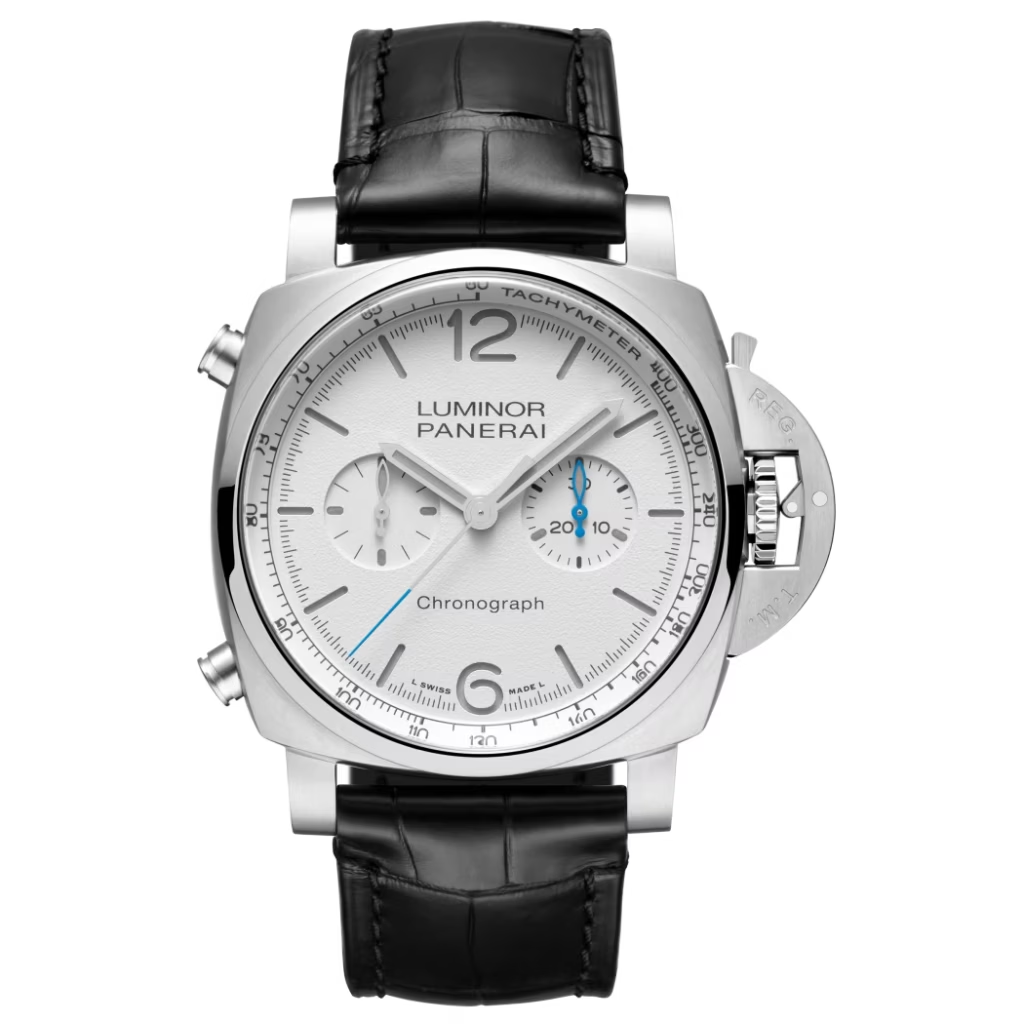
A Panerai chronograph in gray Super-LumiNova with a white sandwich dial is unexpectedly fresh.
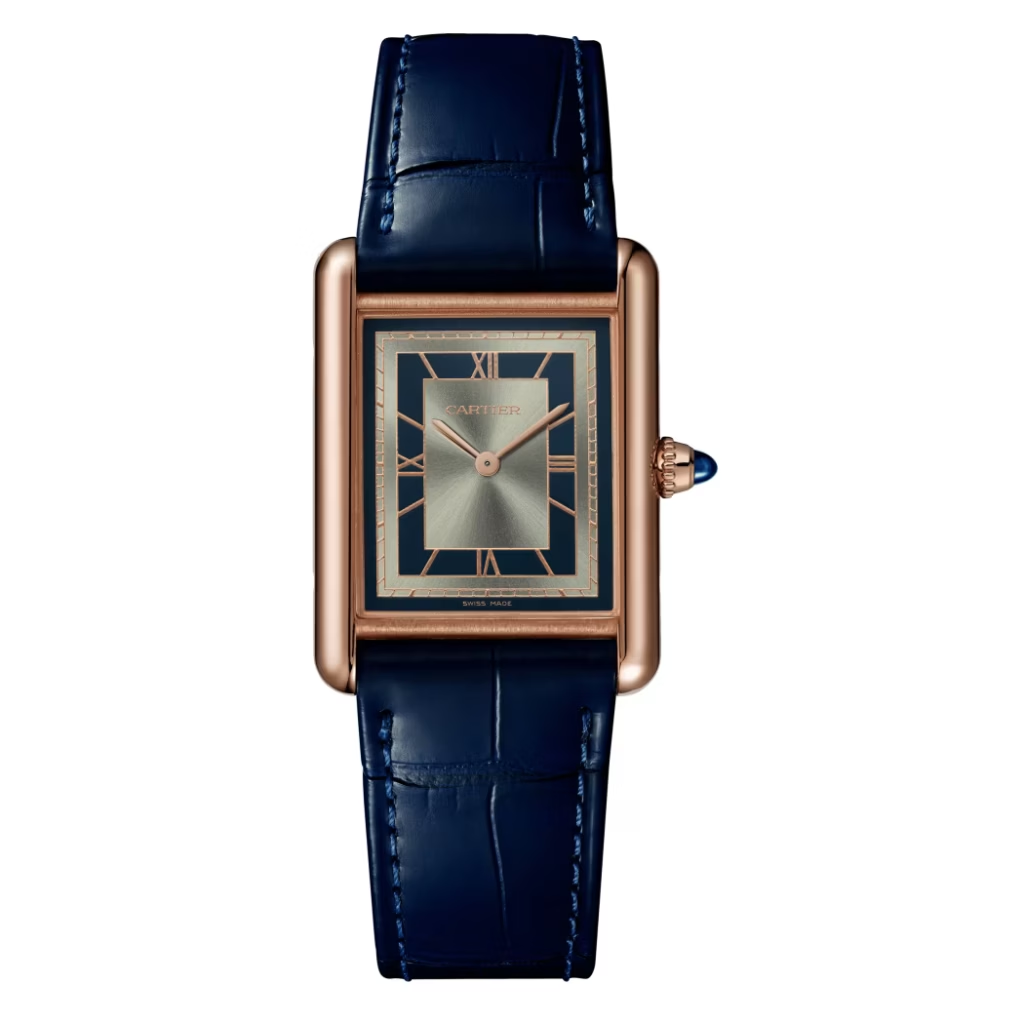
Cartier’s new Tank Louis is a sophisticated, art deco–style take on the classic design.
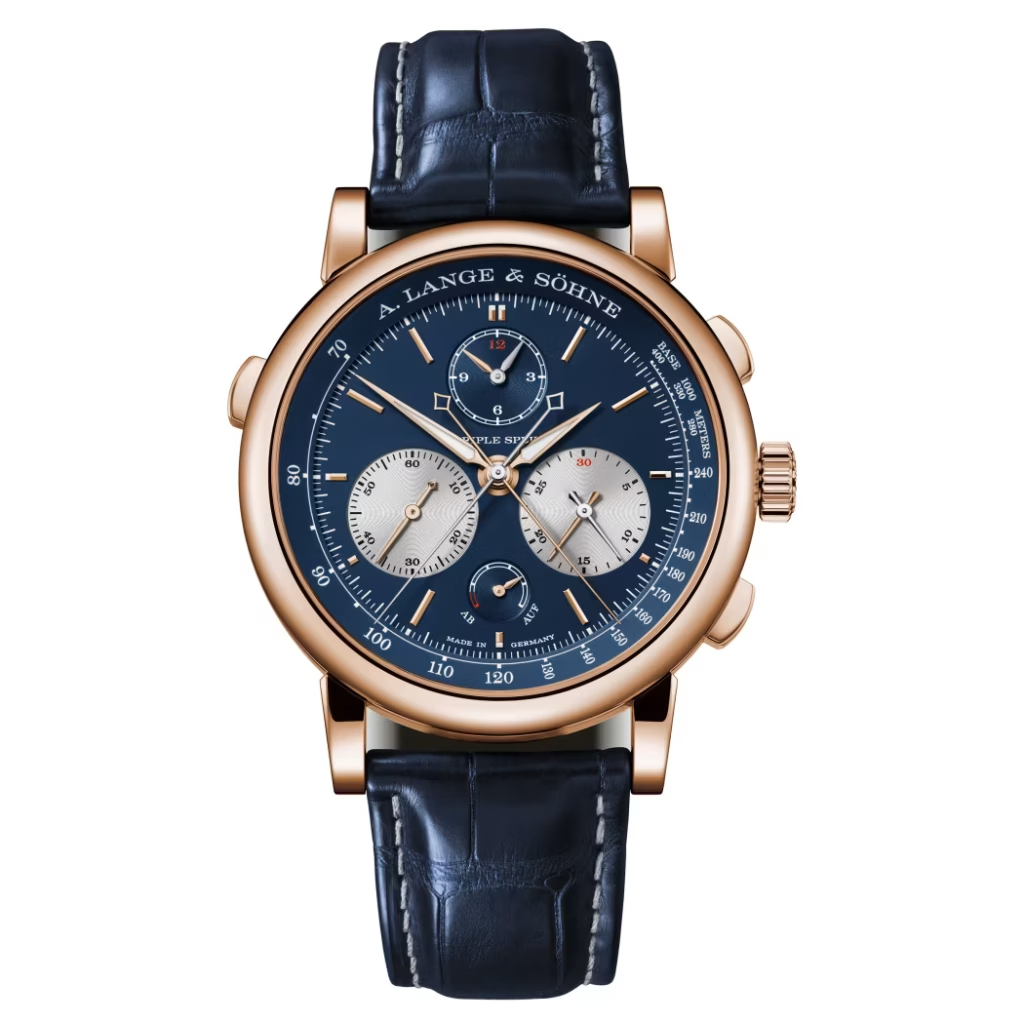
A. Lange & Söhne reintroduces the three-year-old Triple Split in a new pink gold and blue combination.
The new Octo Finissimo from Bulgari is the thinnest perpetual calendar on the market with a movement just 2.75mm thick.
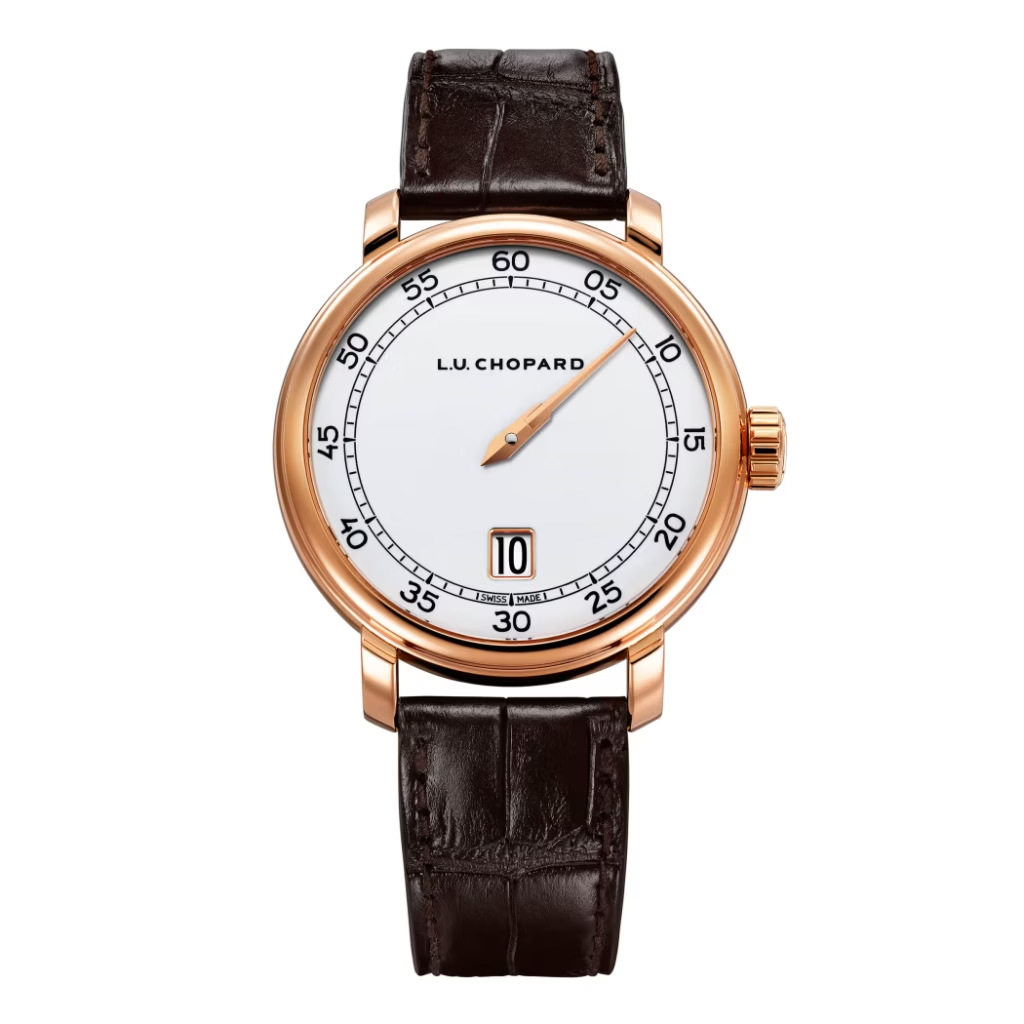
Chopard celebrates 25 years of watchmaking with its very first in-house jumping-hour complication.
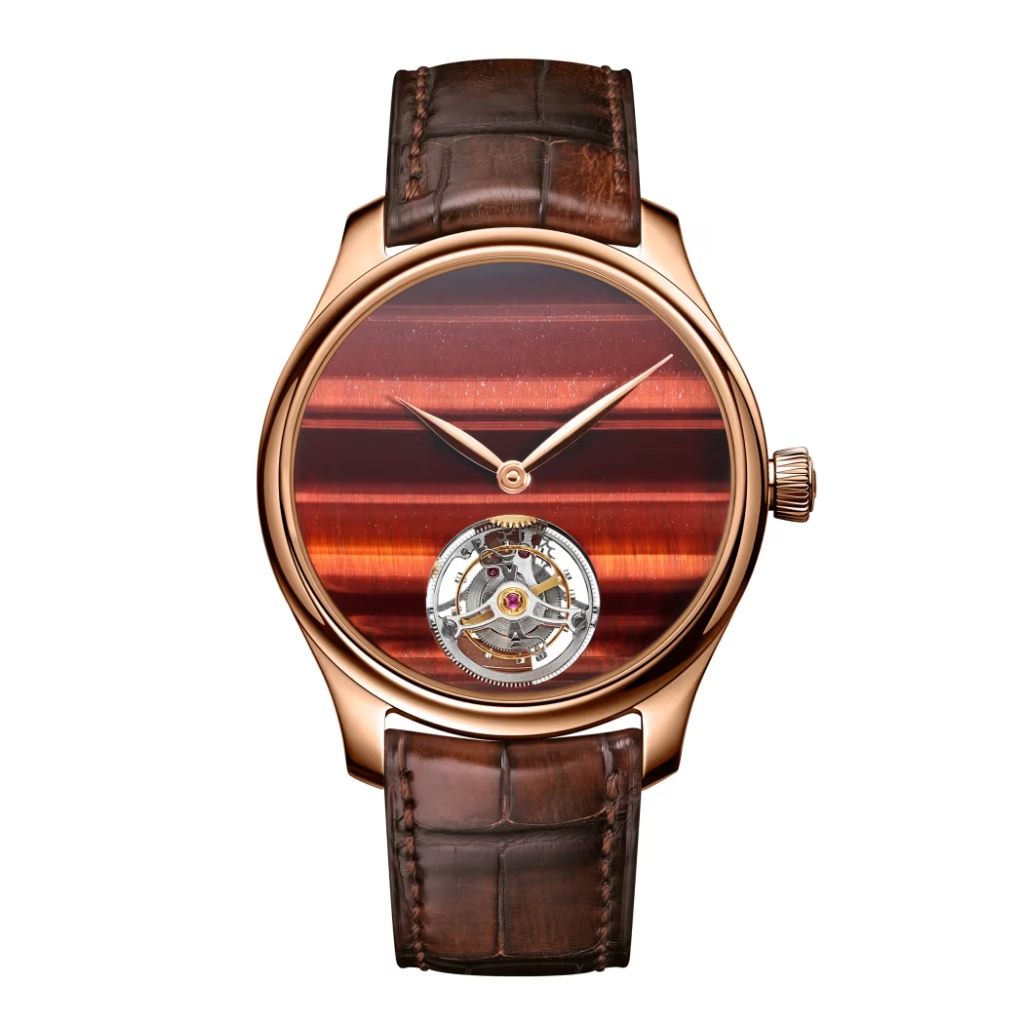
Cut from Tiger’s Eye stones, the new H. Moser Endeavor Tourbillon dials are all one-of-a-kind.
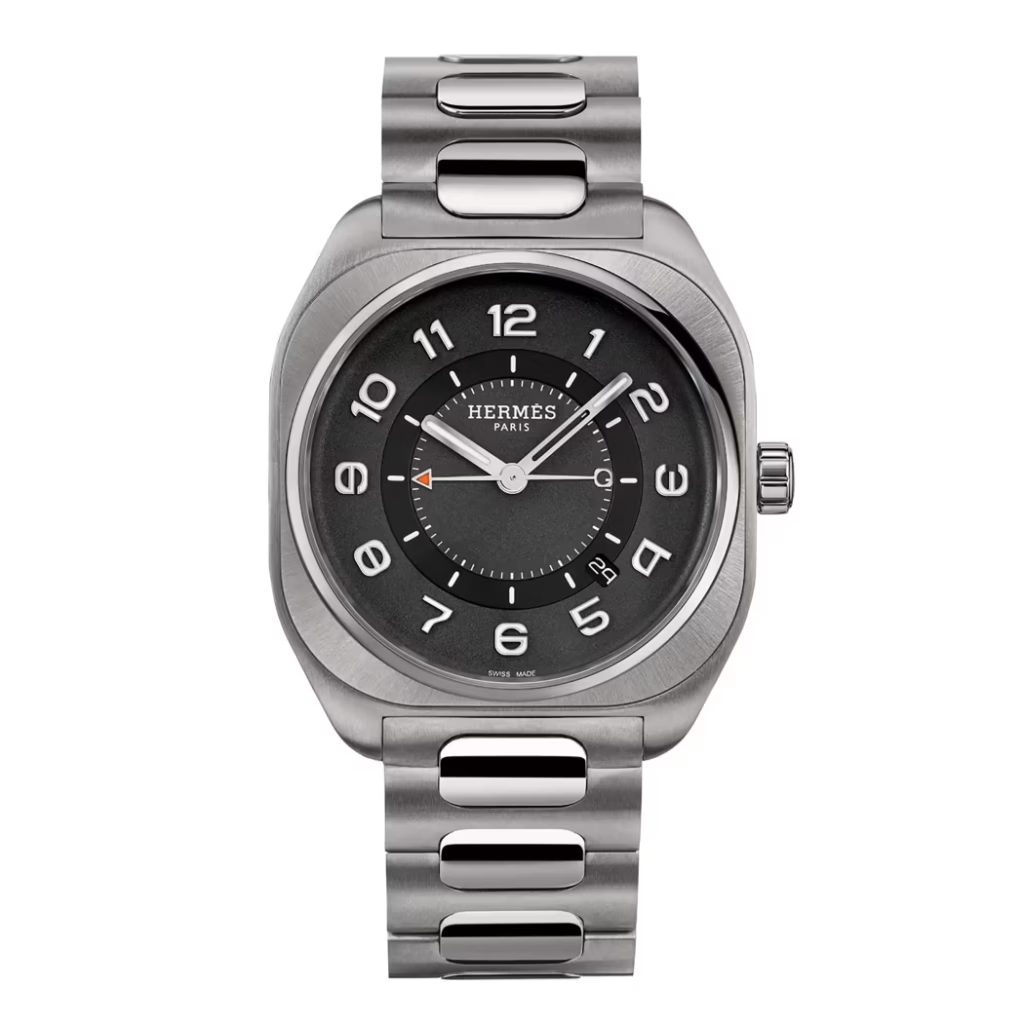
Hermès introduces a new class of sporty, cushion-shaped timepieces in a range of materials including satin-brushed titanium.
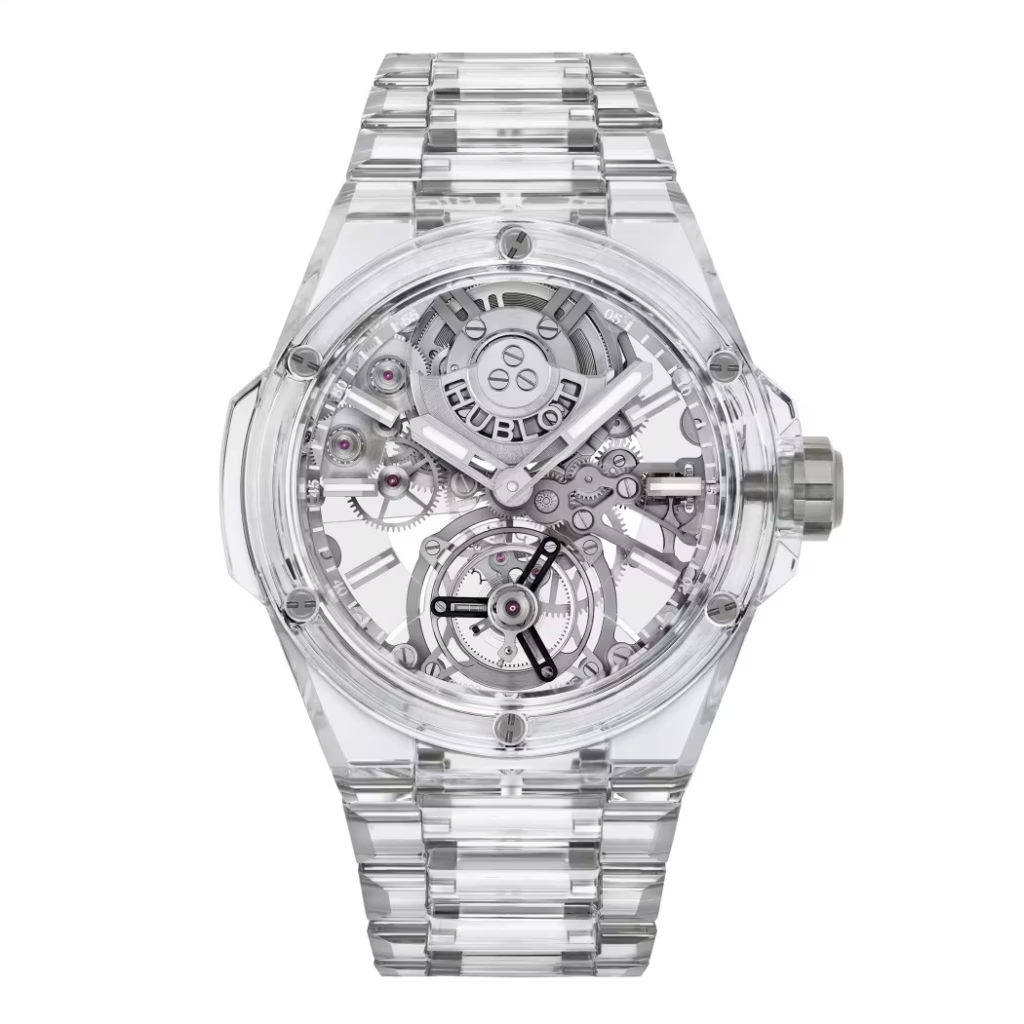
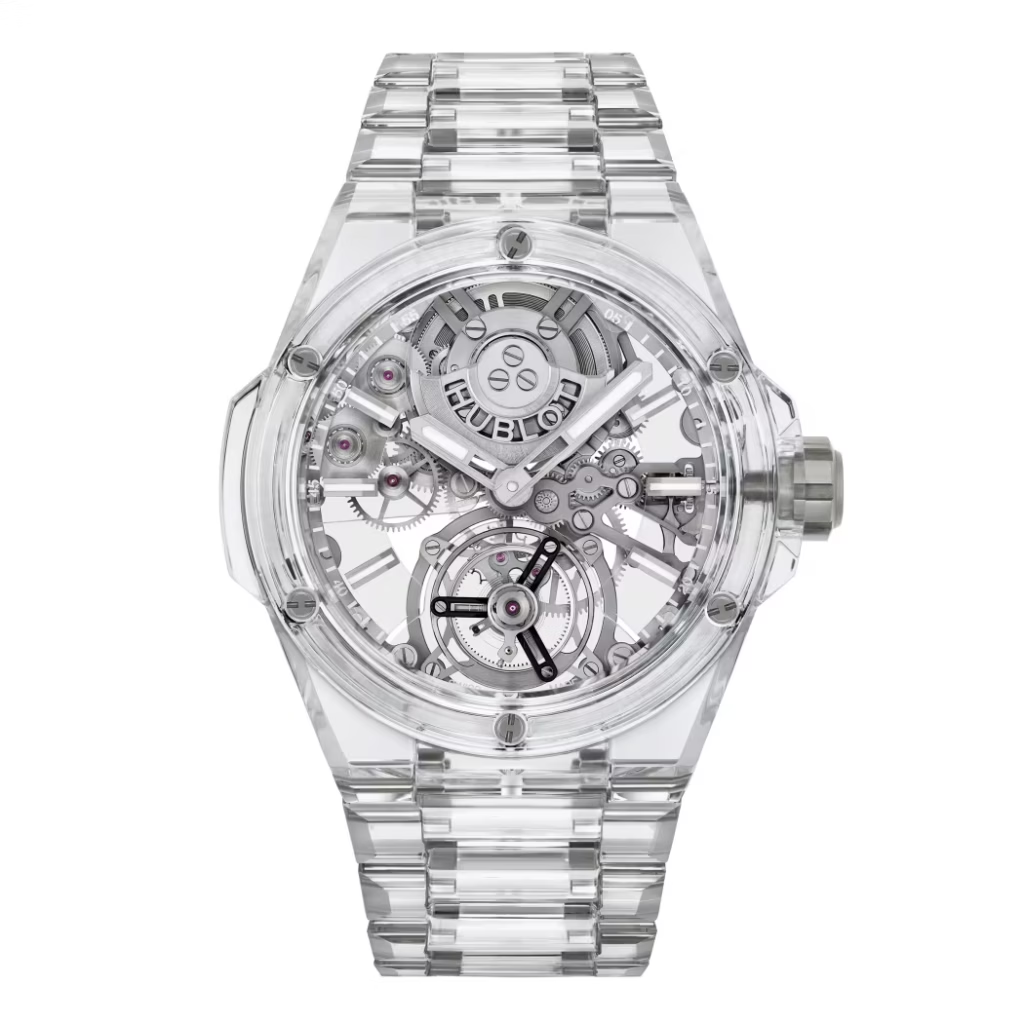
The Big Bang model from Hublot transforms into a light-catching object crafted from clear sapphire crystal.
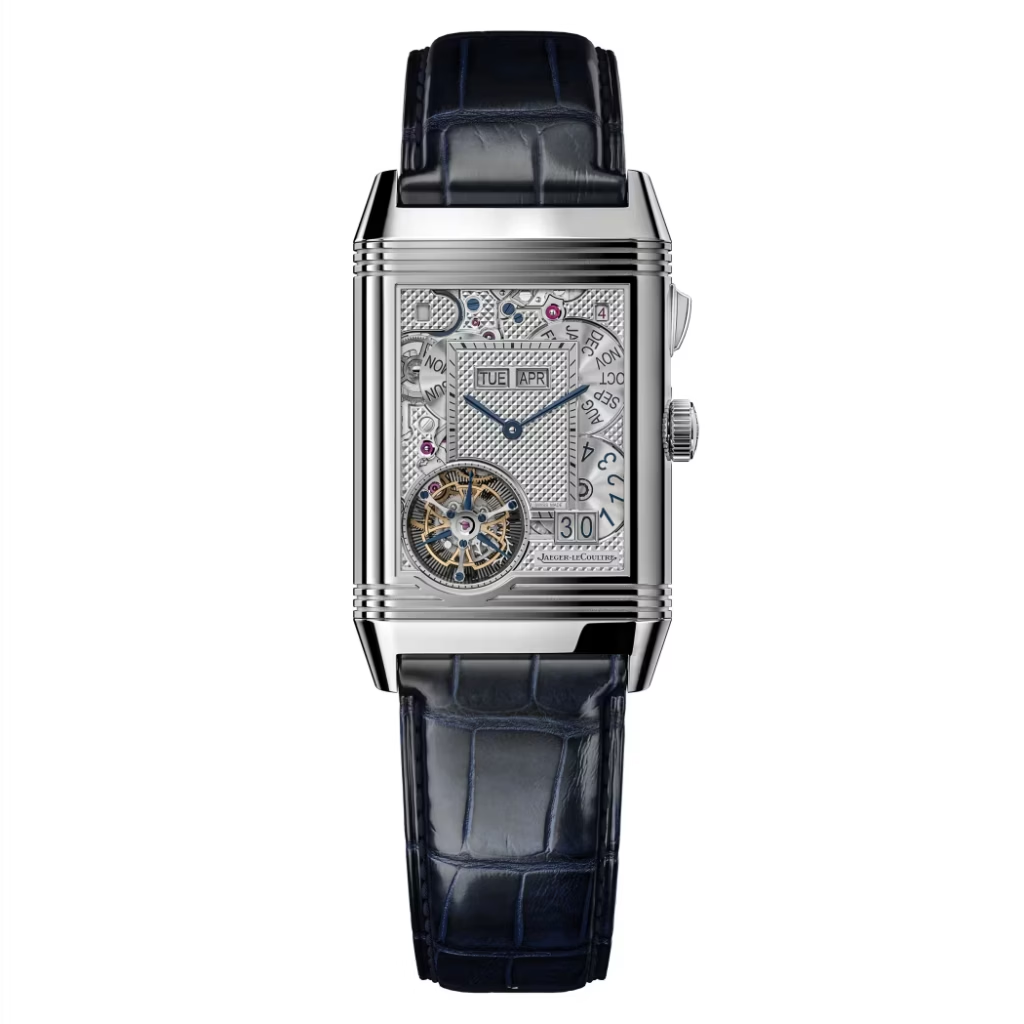
Jaeger Le-Coultre’s new Reverso is demure yet replete with 11 complications.
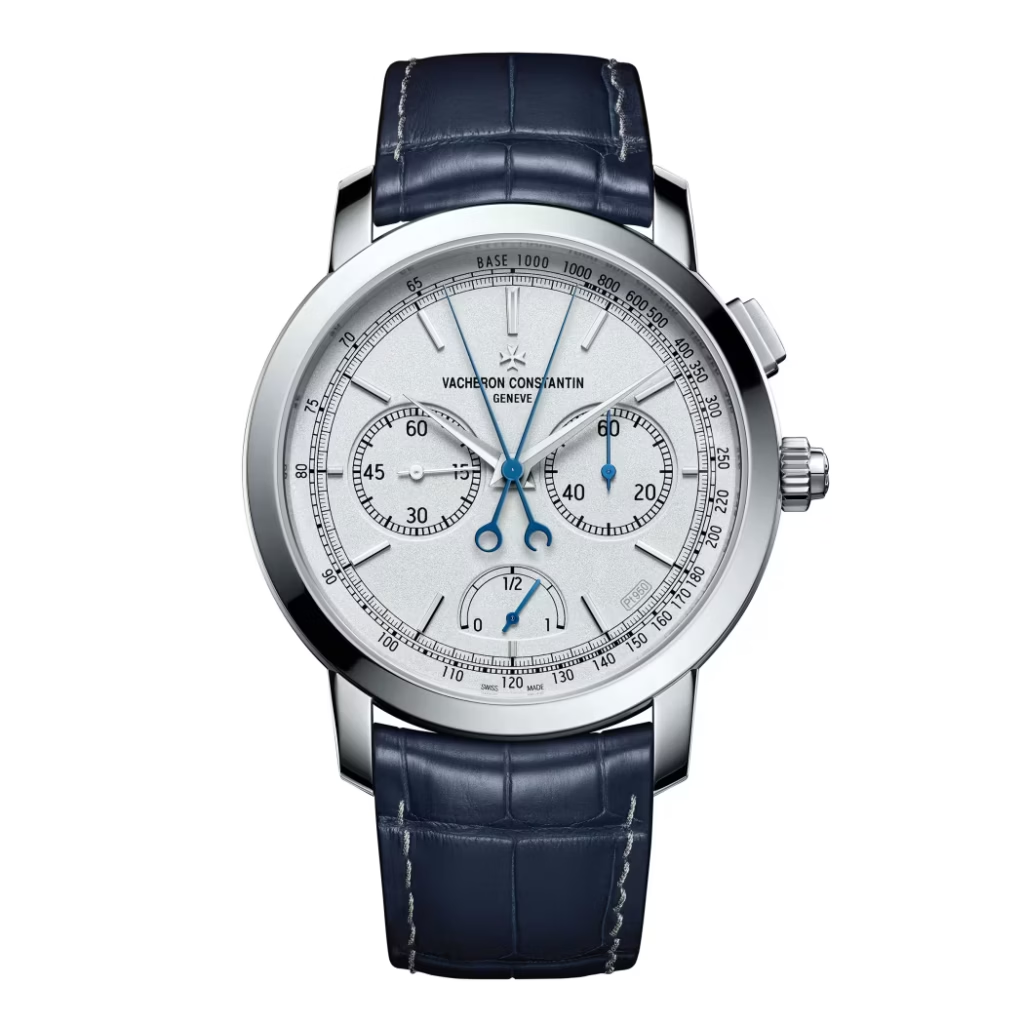
Vacheron Constantin’s new Traditionnelle Split-Seconds Chronograph Ultra-Thin will be released in a run of just 15 pieces.